
Where Is Cryptocurrency Legal? A Global Map for 2025


The global trend is overwhelmingly positive, with a vast majority of nations recognizing the legality of cryptocurrencies.
Europe: The Leader in Legalization (95.1% Legal)
Europe stands at the forefront of crypto adoption, with 39 out of 41 countries recognizing its legality.
- Austria: Legal and accepted as a means of payment.
- Belgium: Legal but subject to financial regulation.
- Bulgaria: Legal.
- Cyprus: Legal and treated as an asset.
- Czech Republic: Legal but subject to tax and financial regulations.
- Denmark: Legal and subject to financial regulation.
- Estonia: A leader in blockchain innovation where crypto is legal.
- Finland: Legal, though some financial regulations may apply.
- France: Has an established regulatory framework for crypto trading and mining.
- Germany: Legal and regulated by financial authorities.
- Greece: Legal, with potential tax and financial regulations.
- Hungary: Legal, with specific tax and reporting requirements.
- Iceland: Legal and highly popular, especially for mining, with government support.
- Ireland: Legal but subject to financial regulation.
- Italy: Legal, though comprehensive regulation is still developing.
- Latvia: Legal and considered an asset.
- Liechtenstein: Open to crypto with a friendly business environment.
- Lithuania: Legal, with a focus on blockchain and crypto innovation.
- Luxembourg: Legal and regulated by financial authorities.
- Malta: Known as the "Blockchain Island" for its friendly stance.
- Netherlands: Legal but subject to financial regulation.
- Norway: Legal, with specific tax and reporting requirements.
- Poland: Legal but subject to financial regulation.
- Portugal: Legal, with tax and financial regulations in place.
- Romania: Legal and subject to financial regulation.
- Slovakia: Legal and subject to financial regulation.
- Slovenia: Legal and subject to financial regulation.
- Spain: Legal and regulated by financial authorities.
- Sweden: Legal, though some financial regulations may apply.
- Switzerland: Hailed as a "crypto paradise" for its welcoming policies.
- United Kingdom: Remains legal and regulated despite other economic challenges.
The Americas: Strong Adoption (77.4% Legal)
Across the Americas, 24 out of 31 countries have legalized cryptocurrency.
- Canada: Maintains a relatively open and legal stance on cryptocurrencies.
- United States: Bitcoin and other cryptocurrencies are legal at the federal level.
- Most Caribbean Islands: Seeking economic diversification, many island nations are presumed to have legalized cryptocurrencies.
- Argentina: Holds a positive attitude and plans to allow crypto payments under certain conditions.
- Brazil: As a major South American economy, Brazil is open to cryptocurrency.
- Chile: Showing interest and considering inclusion in its financial regulatory system.
- Colombia: Actively pursuing opportunities related to blockchain technology.
Asia: A Dynamic and Growing Market (77.7% Legal)
Asia shows significant progress, with 35 out of 45 countries acknowledging crypto's legality.
- China: While trading and mining face strict regulations, crypto investment is not entirely banned, meaning it is not technically "illegal" but heavily restricted.
- Hong Kong: Legal.
- Taiwan: Adopts a "neutral" stance, neither fully legalizing nor explicitly banning crypto.
- Japan: Recognized Bitcoin as a legal payment method in 2017 and regulates exchanges.
- South Korea: Permits and regulates cryptocurrency trading.
- Singapore: A premier crypto-friendly hub in Asia with clear regulations.
- Thailand: Integrated crypto into its digital economy strategy and regulates exchanges.
- Philippines: Established a regulatory framework in 2019, allowing licensed exchanges to operate.
Oceania, The Middle East & Africa: An Expanding Frontier
These regions show varied but growing acceptance.
- Australia: Open to cryptocurrency and has recognized its legality.
- New Zealand: Open to crypto and allows it as a legal means of payment.
- Pacific Island Nations (e.g., Marshall Islands, Solomon Islands): It is likely that many have legalized crypto, though public information is limited.
- United Arab Emirates: Has officially recognized the legality of cryptocurrency.
- Israel: A leading nation in the Middle East for crypto and blockchain technology.
- Africa: Adoption is growing, with 17 of 44 nations (38.6%) having legalized crypto.
- Central African Republic (CAR): Became the second country in the world to adopt Bitcoin as legal tender in 2022.
- Nigeria: Legalized the use of Bitcoin and other digital currencies in 2022.
Conclusion: A Predominantly Positive Global Outlook
As of 2025, the overwhelming majority of countries have adopted a positive policy stance towards the crypto market. From the comprehensive legal frameworks in Europe to the burgeoning hubs in Asia and the Americas, the trend is clearly toward greater acceptance and regulation, paving the way for a more mature and stable global crypto economy.
You may also like
WCOR Coin Explained: World Collective Oil Reserve on Solana
WCOR coin is a Solana token tied to an oil-reserve registry narrative. Here’s what it claims, current data, and the risks traders should watch.
What Is SAOS Crypto? Can SAOS Hit $0.1?
Is SAOS crypto a hidden gem? Strategic American Oil Supply on Solana explained. No hype, just data: $75K cap, locked LP, RWA narrative.
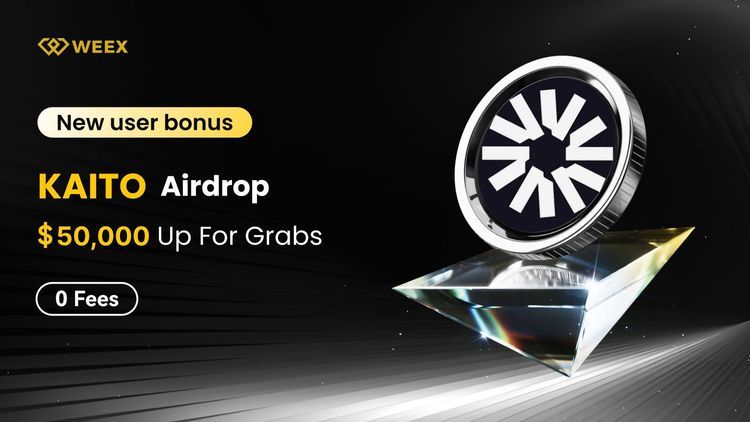
KAIO Airdrop: Share 50,000 USDT on WEEX with 0-Fee Trading
Trade KAIO/USDT with 0 fees on WEEX from May 7–14, 2026. New users can complete deposit and spot trading tasks to share 50,000 USDT in rewards.

What Is SAOS? Strategic American Oil Supply Token Explained
SAOS is a meme token on Solana with a 75,000 USD market cap and 22,000 USD locked liquidity, positioned around oil supply themes but lacking real asset backing
It thrives on pure narrative speculation, with no utility, website, or doxxed team, making it highly volatile and attention-dependent
Traders should distinguish SAOS from legitimate real-world asset projects, as its branding is speculative rather than substantive
Positive aspects include locked liquidity reducing rug pull risks, but low trading activity signals high uncertainty
How to Buy Public Asset Control (PAC) Token in 2026: Latest Solana Buying Guide
How to buy Public Asset Control (PAC) token in 2026, PAC contract address, Solana wallet setup, Jupiter swap guide, latest price, liquidity, and risks.

What Is Public Asset Control (PAC) Token and How Does It Work? Latest Solana PAC Token Guide
Public Asset Control (PAC) token explained. Learn what PAC is, how it works on Solana, current price snapshot, risks, and buying basics.
Can PAC Coin Reach $1 Soon? Analyzing Public Asset Control
PAC is a Solana-based meme token with a government-themed narrative, but it is highly speculative.
At its current price (~$0.0009) and 1B supply, reaching $1 would require a $1B market cap, which is very unlikely.
Short-term moves to $0.001 or $0.01 are more realistic, but the token is highly volatile due to low liquidity and hype-driven trading.
Overall, $1 is not a realistic target, and PAC is better suited for short-term speculation than long-term investment.

United Nations Oil Reserve (UNOS) Crypto: Solana Token, UN Links, and Risks
United Nations Oil Reserve (UNOS) Crypto explained: Solana token basics, UN links, oil-backing claims, market risks, contract checks, and buying cautions.

What Is Public Asset Control (PAC) Coin? Explained for Beginners
Public Asset Control (PAC) is a Solana-based token that uses a “government asset control” narrative involving oil and gold themes, but it has no verified ties to any real institutions or governments. It is mainly an entertainment-focused, speculative meme coin.
The project’s claims about links to entities like BlackRock or Palantir are unverified, and its own disclaimer states it is not a real financial or institutional asset. Like many new Solana tokens, PAC is highly volatile, with low liquidity and limited transparency, including no fully verified audit.
Overall, PAC is a high-risk speculative token driven by hype and storytelling rather than real utility. Beginners are advised to be cautious, verify contract details, and prioritize risk control before considering any trading.
What Is Official Saudi Oil Reserve (OSOR) Coin?
Learn what OSOR coin is, why its Saudi oil narrative matters, how to verify the contract, and what risks to check before trading.

Global Digital Oil Reserve (GDOR): What It Is, Risks, and How to Check It
Global Digital Oil Reserve (GDOR) is an oil-themed Solana token with unclear backing. Learn its risks, market data, and verification checklist.
Is OBC Crypto a Good Investment?
Is OBC crypto a good investment? We analyze the latest market data, holder concentration, liquidity risks, and short-term momentum. Read this before you invest in OBC token.
Can OSOR Reach $1? Full Price Analysis 2026
OSOR crypto price prediction 2026: Can Saudi Oil Reserve token reach 1? Read before buying.

What is International Oil Supply (IOS) Coin?
Wondering what is IOS crypto? Here’s a straight look at International Oil Supply (IOS) coin—the Solana token tied to oil reserve data. Contract address, risks, and what’s still unverified.

What Is the Unified International Token (UNIT)? Is UNIT Crypto Legit or Scam?
what is UNIT crypto? Here’s a breakdown of the Unified International Token ($UNIT), how it ties to BRICS+ data, where to buy it, and why it’s a conceptual project—not an official currency.
What Is Stablecoin Business OS (SBOS) Coin?
What is SBOS crypto? We break down Stablecoin Business OS, its USDC invoicing tools, AI finance assistant, token contract address, and real utility for online businesses.
World Collective Oil Reserve ($WCOR) Price Prediction: May 2026 Rally Analysis and Future Outlook
Is $WCOR a good investment? Read our comprehensive World Collective Oil Reserve price prediction and market analysis for 2026-2030. Learn about the energy narrative on Solana and start your trading journey with WEEX rewards.
Is OSOR Token Next 10X Like WCOR or Just Market Hype?
Is OSOR the next 10X crypto like WCOR or just market hype? Compare OSOR vs WCOR on-chain data, price discrepancies, and holder risks in this deep dive into Saudi oil-backed tokens.
WCOR Coin Explained: World Collective Oil Reserve on Solana
WCOR coin is a Solana token tied to an oil-reserve registry narrative. Here’s what it claims, current data, and the risks traders should watch.
What Is SAOS Crypto? Can SAOS Hit $0.1?
Is SAOS crypto a hidden gem? Strategic American Oil Supply on Solana explained. No hype, just data: $75K cap, locked LP, RWA narrative.
KAIO Airdrop: Share 50,000 USDT on WEEX with 0-Fee Trading
Trade KAIO/USDT with 0 fees on WEEX from May 7–14, 2026. New users can complete deposit and spot trading tasks to share 50,000 USDT in rewards.
What Is SAOS? Strategic American Oil Supply Token Explained
SAOS is a meme token on Solana with a 75,000 USD market cap and 22,000 USD locked liquidity, positioned around oil supply themes but lacking real asset backing
It thrives on pure narrative speculation, with no utility, website, or doxxed team, making it highly volatile and attention-dependent
Traders should distinguish SAOS from legitimate real-world asset projects, as its branding is speculative rather than substantive
Positive aspects include locked liquidity reducing rug pull risks, but low trading activity signals high uncertainty
How to Buy Public Asset Control (PAC) Token in 2026: Latest Solana Buying Guide
How to buy Public Asset Control (PAC) token in 2026, PAC contract address, Solana wallet setup, Jupiter swap guide, latest price, liquidity, and risks.
What Is Public Asset Control (PAC) Token and How Does It Work? Latest Solana PAC Token Guide
Public Asset Control (PAC) token explained. Learn what PAC is, how it works on Solana, current price snapshot, risks, and buying basics.


