
What Is Kernel DAO & How to Get the Kernel DAO Airdrop on WEEX Exchange?

Kernel DAO is a groundbreaking re-staking protocol on the BNB Chain, revolutionizing how users maximize the utility and security of their staked assets. With the Kernel DAO airdrop and Kernel airdrop campaigns generating buzz, this guide answers What Is Kernel DAO, explores its roadmap, products, and provides a step-by-step process to secure the Kernel DAO airdrop and trade $KERNEL tokens on WEEX Exchange.
What is Kernel DAO?
What Is Kernel DAO? Kernel DAO is a leading re-staking protocol on BNB Chain, designed to enhance the security and efficiency of staked assets such as BNB, BTC, slisBNB, and SolvBTC. By leveraging shared security protocols, Kernel DAO allows users to re-stake assets across multiple decentralized applications, transforming them into high-yield tools. This innovative approach not only boosts asset utilization but also strengthens the BNB Chain ecosystem, making Kernel DAO a cornerstone of decentralized finance (DeFi).
For those asking What Is Kernel DAO, it’s a protocol that unlocks capital efficiency and provides cost-effective security for Proof-of-Stake (PoS) ecosystems. With over $2 billion in Total Value Locked (TVL) across its ecosystem, Kernel DAO empowers users to earn enhanced rewards while contributing to network security. The Kernel DAO airdrop and Kernel airdrop further incentivize participation, offering $KERNEL tokens to early adopters.
Kernel DAO’s Future Roadmap
The future of Kernel DAO is promising, with a 2025 roadmap that highlights its commitment to innovation and expansion. Understanding What Is Kernel DAO includes recognizing its long-term vision:
- Q1 2025: Strengthen DeFi capabilities with three new Gain Vaults and expand rsETH integrations.
- Q2 2025: Launch BTC reward opportunities, introduce BTC-specific Gain Vaults, and increase presence on centralized exchanges like WEEX Exchange.
- Q3 2025: Enter the Real-World Assets (RWA) market with RWA products in Gain and implement slashing mechanisms in Kernel.
- Q4 2025: Expand multi-chain functionality, launch a new blockchain, and broaden RWA assets in Gain.
This roadmap positions Kernel DAO as a leader in DeFi, making the Kernel DAO airdrop and Kernel airdrop attractive opportunities for users to join a forward-thinking ecosystem.
Kernel DAO’s Core Products
To fully understand What Is Kernel DAO, let’s dive into its three core products, each addressing unique needs in the re-staking ecosystem:
1. Kernel
The Kernel protocol is the foundation of Kernel DAO, providing re-staking infrastructure for assets like BNB and BTC. With $300 million in TVL and over 25 ecosystem projects, Kernel offers:
- Shared Security: Reduces costs for Distributed Validator Networks (DVNs) by 10x to 100x.
- Enhanced Rewards: Enables delegators to maximize returns.
- Operator Revenue: Boosts income through multi-node validation.
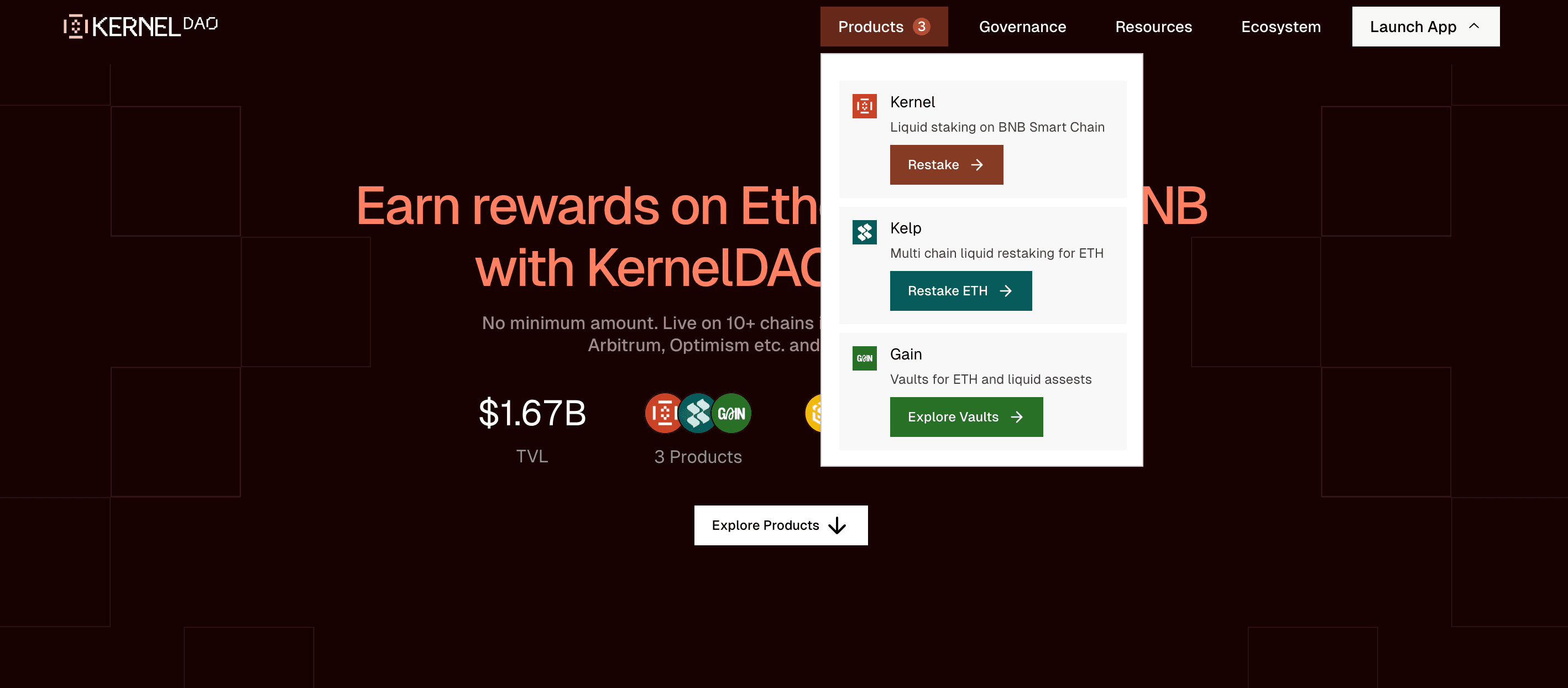
2. Kelp rsETH
Kelp rsETH is a liquid re-staking platform on Ethereum with $2 billion in TVL and 400,000+ re-stakers. Its Liquid Re-staking Token (rsETH) provides:
- Instant Liquidity: Access funds without long lock-ups.
- Simplified Risk Management: Enhances rewards with minimal complexity.
- DeFi Integration: Connects with 50+ DeFi platforms, including Layer 2 solutions.
3. Kelp Gain
Kelp Gain offers non-custodial, automated Yield Vaults on Ethereum, with $200 million in TVL. Key features include:
- Airdrop Gain Vault (agETH): Boosts rewards from premium Layer 2 airdrops.
- High Gain Vault (hgETH): Delivers risk-adjusted returns via professional management.
- Composability: Liquid vault tokens maximize capital efficiency.
These products underscore What Is Kernel DAO—a versatile platform driving DeFi innovation and rewarding users through the Kernel DAO airdrop and Kernel airdrop.
How to Get the Kernel DAO Airdrop?
The Kernel DAO airdrop and Kernel airdrop are exciting opportunities to earn $KERNEL tokens. Here’s how to participate, leveraging Binance Megadrop, which WEEX Exchange users can complement with post-airdrop trading:
Step 1: Set Up a Binance Account
To join the Kernel DAO airdrop, register on Binance and download the Binance app. WEEX Exchange users should ensure their accounts are ready for $KERNEL trading after the airdrop.
Step 2: Know the Megadrop Schedule
The Kernel airdrop runs from April 9, 2025, 08:00:00 (UTC+8) to April 14, 2025, 07:59:59 (UTC+8). Binance takes hourly snapshots of BNB holdings in Simple Earn Locked Products. Subscribe to BNB Locked Products before April 9 to maximize rewards.
Step 3: Complete Web3 Quests
Qualify for the Kernel DAO airdrop by completing these tasks:
- Transfer Assets: Move 0.013 BNB or 0.013 asBNB (including ~0.003 BNB for gas fees) to your Binance Wallet.
- Stake on Kernel DAO: Stake at least 0.01 BNB or 0.01 asBNB on the Kernel DAO platform.
Step 4: Join the Kernel Airdrop Event
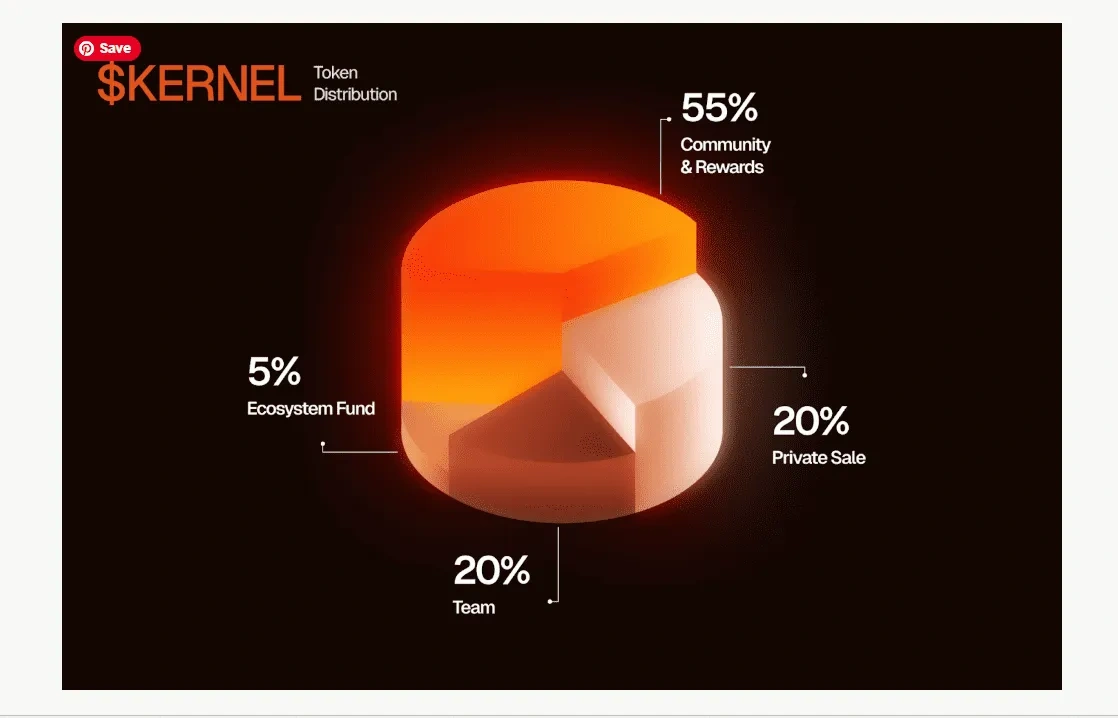
The Kernel airdrop allocates 40 million $KERNEL tokens (4% of total supply) to participants. Stake at least 0.01 asBNB or 0.01 BNB to earn rewards based on a points system that considers locked BNB and Web3 quest completion.
Step 5: Follow the Megadrop Process
- Access Megadrop: Navigate to the KERNEL Megadrop page in the Binance app.
- Acquire Assets:
- Option 1: Deposit 0.013 BNB or 0.013 asBNB via the “Receive” button.
- Option 2: Swap to asBNB in the Binance Wallet’s Swap section.
- Re-stake: Click “Stake asBNB” or “Stake BNB,” connect your Binance Web3 Wallet, and stake at least 0.01 asBNB or 0.01 BNB.
- Verify Tasks: Return to the Megadrop Quest page and click “Verify.” Retry if delays occur.
- Unstake (Optional): Connect to the Kernel dApp, select your asset, and confirm withdrawal.
By following these steps, you can secure your Kernel DAO airdrop and Kernel airdrop rewards, setting the stage for trading on WEEX Exchange.
How to Buy $KERNEL Tokens on WEEX Exchange
After securing your Kernel DAO airdrop tokens, you may want to buy more $KERNEL tokens. WEEX offers a user-friendly platform with high liquidity. Here’s how:
- Fund Your Account: Deposit cryptocurrencies or fiat into your WEEX Exchange account.
- Find the Trading Pair: Search for the KERNEL/USDT pair in the spot trading section.
- Place an Order: Use a market order for instant purchase or a limit order for a specific price.
- Verify Your Wallet: Confirm that $KERNEL tokens are credited to your wallet.
WEEX’s seamless interface makes it ideal for trading $KERNEL tokens earned from the Kernel DAO airdrop or Kernel airdrop.
Conclusion
What Is Kernel DAO? It’s a pioneering re-staking protocol on BNB Chain that enhances the security and yield of staked assets while fostering a robust DeFi ecosystem. The Kernel DAO airdrop and Kernel airdrop provide an accessible entry point for users to earn $KERNEL tokens and engage with this innovative platform. By participating in the Binance Megadrop and trading on WEEX Exchange, you can capitalize on Kernel DAO’s growth and ambitious 2025 roadmap. Don’t miss the chance to join the Kernel DAO airdrop and be part of the future of re-staking!
Frequently Asked Questions (FAQs)
What Is Kernel DAO?
Kernel DAO is a BNB Chain-based re-staking protocol that maximizes the utility and security of assets like BNB and BTC through shared security mechanisms.
How Do I Get the Kernel DAO Airdrop?
Register on Binance, lock BNB in Simple Earn, and complete Web3 quests like staking 0.01 BNB or 0.01 asBNB to earn the Kernel DAO airdrop.
What Are Kernel DAO’s Main Products?
Kernel DAO offers Kernel (re-staking infrastructure), Kelp rsETH (liquid re-staking), and Kelp Gain (automated Yield Vaults), each enhancing user rewards and security.
How Can I Buy $KERNEL Tokens?
Purchase $KERNEL tokens on WEEX Exchange or Binance by depositing funds, selecting the KERNEL/USDT pair, and placing a market or limit order.
Is the Kernel Airdrop Safe?
While the Kernel airdrop offers rewards, risks like slashing, smart contract vulnerabilities, and market volatility exist. Always research thoroughly.
Disclaimer: Cryptocurrency investments involve risks, including price volatility. Conduct your own research and consult professionals before participating in airdrops or trading.
Latest Updates on WEEX
WEEX Exchange’s WXT Token Surges 101%
If you want to buy WXT now, you can sign up for a WEEX account
WEEX Owen: Michael Owen Joins as Global Brand Ambassador
Championing a revolutionary crypto trading experience
You may also like

What Is SAOS? Strategic American Oil Supply Token Explained
SAOS is a meme token on Solana with a 75,000 USD market cap and 22,000 USD locked liquidity, positioned around oil supply themes but lacking real asset backing
It thrives on pure narrative speculation, with no utility, website, or doxxed team, making it highly volatile and attention-dependent
Traders should distinguish SAOS from legitimate real-world asset projects, as its branding is speculative rather than substantive
Positive aspects include locked liquidity reducing rug pull risks, but low trading activity signals high uncertainty
How to Buy Public Asset Control (PAC) Token in 2026: Latest Solana Buying Guide
How to buy Public Asset Control (PAC) token in 2026, PAC contract address, Solana wallet setup, Jupiter swap guide, latest price, liquidity, and risks.

What Is Public Asset Control (PAC) Token and How Does It Work? Latest Solana PAC Token Guide
Public Asset Control (PAC) token explained. Learn what PAC is, how it works on Solana, current price snapshot, risks, and buying basics.

Can PAC Coin Reach $1 Soon? Analyzing Public Asset Control
PAC is a Solana-based meme token with a government-themed narrative, but it is highly speculative.
At its current price (~$0.0009) and 1B supply, reaching $1 would require a $1B market cap, which is very unlikely.
Short-term moves to $0.001 or $0.01 are more realistic, but the token is highly volatile due to low liquidity and hype-driven trading.
Overall, $1 is not a realistic target, and PAC is better suited for short-term speculation than long-term investment.

United Nations Oil Reserve (UNOS) Crypto: Solana Token, UN Links, and Risks
United Nations Oil Reserve (UNOS) Crypto explained: Solana token basics, UN links, oil-backing claims, market risks, contract checks, and buying cautions.

What Is Public Asset Control (PAC) Coin? Explained for Beginners
Public Asset Control (PAC) is a Solana-based token that uses a “government asset control” narrative involving oil and gold themes, but it has no verified ties to any real institutions or governments. It is mainly an entertainment-focused, speculative meme coin.
The project’s claims about links to entities like BlackRock or Palantir are unverified, and its own disclaimer states it is not a real financial or institutional asset. Like many new Solana tokens, PAC is highly volatile, with low liquidity and limited transparency, including no fully verified audit.
Overall, PAC is a high-risk speculative token driven by hype and storytelling rather than real utility. Beginners are advised to be cautious, verify contract details, and prioritize risk control before considering any trading.

What Is Official Saudi Oil Reserve (OSOR) Coin?
Learn what OSOR coin is, why its Saudi oil narrative matters, how to verify the contract, and what risks to check before trading.

Global Digital Oil Reserve (GDOR): What It Is, Risks, and How to Check It
Global Digital Oil Reserve (GDOR) is an oil-themed Solana token with unclear backing. Learn its risks, market data, and verification checklist.

Is OBC Crypto a Good Investment?
Is OBC crypto a good investment? We analyze the latest market data, holder concentration, liquidity risks, and short-term momentum. Read this before you invest in OBC token.

Can OSOR Reach $1? Full Price Analysis 2026
OSOR crypto price prediction 2026: Can Saudi Oil Reserve token reach 1? Read before buying.

What is International Oil Supply (IOS) Coin?
Wondering what is IOS crypto? Here’s a straight look at International Oil Supply (IOS) coin—the Solana token tied to oil reserve data. Contract address, risks, and what’s still unverified.

What Is the Unified International Token (UNIT)? Is UNIT Crypto Legit or Scam?
what is UNIT crypto? Here’s a breakdown of the Unified International Token ($UNIT), how it ties to BRICS+ data, where to buy it, and why it’s a conceptual project—not an official currency.
What Is Stablecoin Business OS (SBOS) Coin?
What is SBOS crypto? We break down Stablecoin Business OS, its USDC invoicing tools, AI finance assistant, token contract address, and real utility for online businesses.

World Collective Oil Reserve ($WCOR) Price Prediction: May 2026 Rally Analysis and Future Outlook
Is $WCOR a good investment? Read our comprehensive World Collective Oil Reserve price prediction and market analysis for 2026-2030. Learn about the energy narrative on Solana and start your trading journey with WEEX rewards.

Is $PAC Token a Good Investment in 2026? Price, Risks, and Market Analysis
A data-driven analysis of Public Asset Control (PAC) token: current price, market cap, liquidity, $1 target feasibility, and risk factors. Is it a legitimate investment or a high-risk meme coin?
NEAR Airdrop: Join WEEX to Share 50,000 USDT in Crypto Rewards
Join the NEAR airdrop on WEEX from May 7 to May 14 to share a 50,000 USDT prize pool. New users can earn rewards through deposits and spot trades with zero-fee trading advantages.

How to Buy $WCOR Coin: Should I Invest or Is It Just Hype?
Learn how to buy $WCOR coin on Solana and explore its latest 57% price surge. This expert guide analyzes whether WCOR is a solid investment or speculative hype.
What Is $PAC Token? Legitimate Crypto or Just A High-Risk Meme Coin?
Is Public Asset Control ($PAC) a real asset-backed token or just another meme coin narrative? We analyze its official website, market data, and risks.
What Is SAOS? Strategic American Oil Supply Token Explained
SAOS is a meme token on Solana with a 75,000 USD market cap and 22,000 USD locked liquidity, positioned around oil supply themes but lacking real asset backing
It thrives on pure narrative speculation, with no utility, website, or doxxed team, making it highly volatile and attention-dependent
Traders should distinguish SAOS from legitimate real-world asset projects, as its branding is speculative rather than substantive
Positive aspects include locked liquidity reducing rug pull risks, but low trading activity signals high uncertainty
How to Buy Public Asset Control (PAC) Token in 2026: Latest Solana Buying Guide
How to buy Public Asset Control (PAC) token in 2026, PAC contract address, Solana wallet setup, Jupiter swap guide, latest price, liquidity, and risks.
What Is Public Asset Control (PAC) Token and How Does It Work? Latest Solana PAC Token Guide
Public Asset Control (PAC) token explained. Learn what PAC is, how it works on Solana, current price snapshot, risks, and buying basics.
Can PAC Coin Reach $1 Soon? Analyzing Public Asset Control
PAC is a Solana-based meme token with a government-themed narrative, but it is highly speculative.
At its current price (~$0.0009) and 1B supply, reaching $1 would require a $1B market cap, which is very unlikely.
Short-term moves to $0.001 or $0.01 are more realistic, but the token is highly volatile due to low liquidity and hype-driven trading.
Overall, $1 is not a realistic target, and PAC is better suited for short-term speculation than long-term investment.
United Nations Oil Reserve (UNOS) Crypto: Solana Token, UN Links, and Risks
United Nations Oil Reserve (UNOS) Crypto explained: Solana token basics, UN links, oil-backing claims, market risks, contract checks, and buying cautions.
What Is Public Asset Control (PAC) Coin? Explained for Beginners
Public Asset Control (PAC) is a Solana-based token that uses a “government asset control” narrative involving oil and gold themes, but it has no verified ties to any real institutions or governments. It is mainly an entertainment-focused, speculative meme coin.
The project’s claims about links to entities like BlackRock or Palantir are unverified, and its own disclaimer states it is not a real financial or institutional asset. Like many new Solana tokens, PAC is highly volatile, with low liquidity and limited transparency, including no fully verified audit.
Overall, PAC is a high-risk speculative token driven by hype and storytelling rather than real utility. Beginners are advised to be cautious, verify contract details, and prioritize risk control before considering any trading.


