
Tether.wallet: What It Is, How It Works, and How to Use It Safely

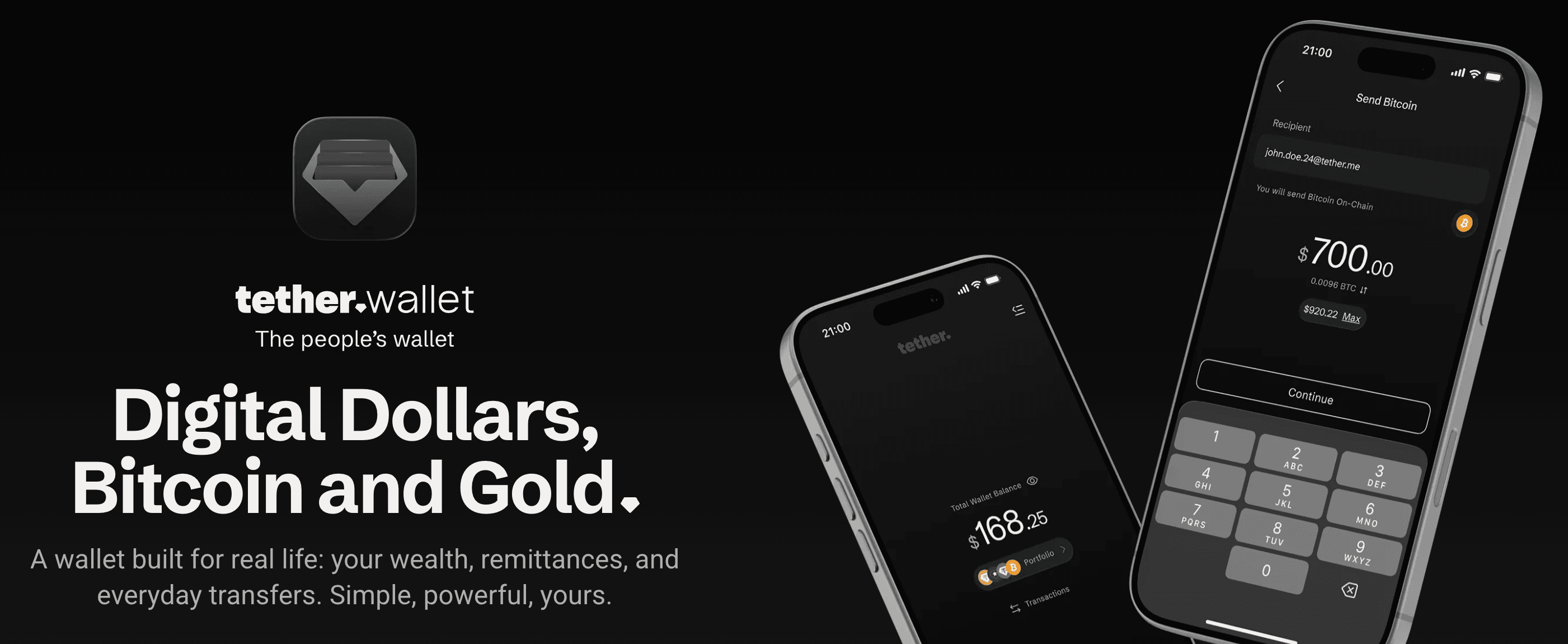
If you searched for Tether.wallet, the short answer is simple: it is Tether’s official self-custodial wallet for holding and moving USDT, USAT, XAUT, and Bitcoin. The product matters because it is built to reduce the friction that keeps normal users from using digital dollars, while still leaving key control on the user side.
That is the upside. The harder truth is that a self-custodial wallet only helps if you use it correctly. In practice, most losses do not come from the wallet brand itself. They come from seed phrase theft, network mismatch, fake token deposits, and users treating self-custody like a reversible banking app when it is not.
What Is Tether.wallet?
Tether.wallet is Tether’s official wallet product, launched on April 14, 2026, as a self-custodial app built on Tether’s Wallet Development Kit. It is meant for people who want direct access to Tether’s assets without relying on a centralized exchange account to hold funds.
The key point is custody. Tether says wallet creation happens on the user’s device, transactions are signed locally, and Tether cannot access or move the funds. That makes Tether.wallet different from an exchange balance. You get control, but you also take responsibility.
For beginners, that tradeoff is the whole story. If you want something that feels like online banking, self-custody may feel harsh. If you want direct control over your assets, tether.wallet is much closer to the right model.
Why Tether.wallet Matters for USDT Users
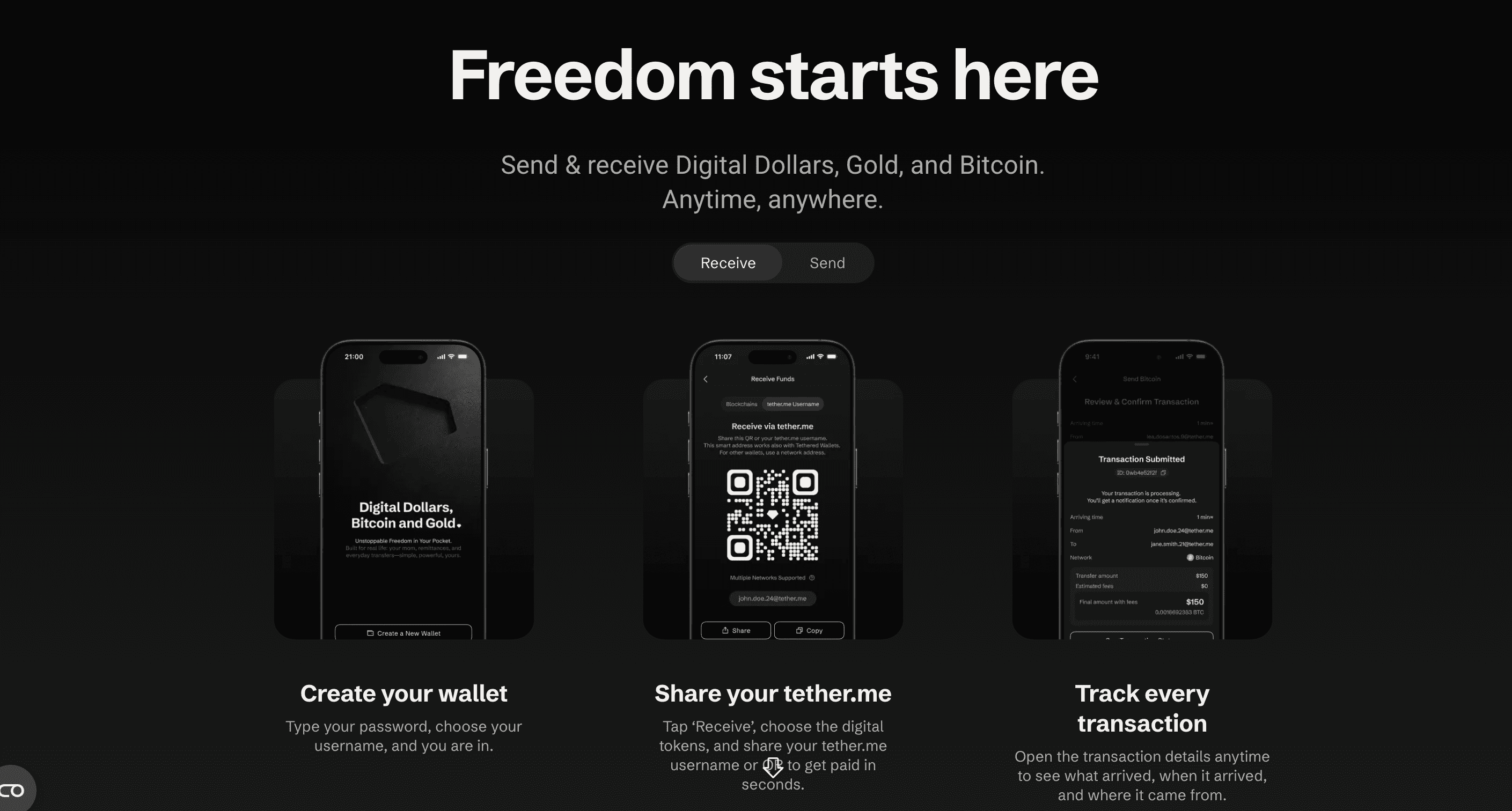
The main value of Tether.wallet is not that it invents a new asset. The value is that it simplifies how people use digital dollars. Tether says the wallet supports human-readable usernames through Tether.me, lets users send funds without typing long wallet strings every time, and allows transaction fees to be paid in the asset being transferred instead of forcing users to hold a separate gas token for every action.
That matters because stablecoin adoption usually breaks on small frictions. People understand dollars. They do not always understand gas, bridges, address formats, or why one USDT transfer costs more than another. Tether.wallet is trying to hide some of that complexity without taking custody away from the user.
If you are still comparing rails before choosing a wallet, it helps to review how WEEX handles deposits across different chains first. The better wallet choice often depends less on branding and more on whether you need cheap transfers, DeFi access, or Bitcoin-native settlement.
How Tether.wallet Works in Practice
In day-to-day use, Tether.wallet is built around three practical ideas:
You hold the keys.
You can recover the wallet with a 12-word recovery phrase.
You can also use encrypted cloud backup if you want easier restoration on a new device.
According to Tether’s wallet documentation, the app can store encrypted wallet data on Tether servers while the encryption key stays in the user’s personal cloud account, such as iCloud or Google Drive. The practical takeaway is that no single part is enough on its own. Recovery happens on your device.
That setup is cleaner than many people expect, but it does not remove the basics of self-custody. If someone gets your recovery phrase, your funds are at risk. If you type that phrase into a fake website, no support team can reverse the damage. Before moving real money, read WEEX’s security alert on phishing websites and scams.
The sending flow is also more user-friendly than a standard raw-address wallet. Tether says users can receive assets either through a Tether.me username or through a normal blockchain address, depending on what the sender supports. That is a real usability upgrade, especially for users who are more likely to make copy-paste errors than smart-contract errors.
Supported Assets, Networks, and How to Prevent Costly Mistakes
At launch, Tether said Tether.wallet supports:
USDT on Ethereum, Polygon, Plasma, and Arbitrum
XAUT on Ethereum, Polygon, Plasma, and Arbitrum
USAT on Ethereum
Bitcoin on-chain and via the Lightning Network
This is where users need to slow down. The most common stablecoin mistake is not picking the wrong wallet. It is picking the wrong network. If you send USDT on one network to a platform or wallet expecting another, recovery may be difficult or impossible.
The second common mistake is assuming every token called USDT is real. Wallet interfaces can show lookalike assets. The safer habit is to verify the network and token details before you move size. If you are funding from an exchange, it also helps to review how to buy USDT with USD on WEEX OTC before the first transfer.
In practice, the right network depends on the job:
Ethereum usually makes more sense for deeper DeFi compatibility.
Lower-cost networks make more sense for routine transfers.
Bitcoin and Lightning make more sense when the payment flow is Bitcoin-native.
The more important point is consistency. Send, receive, and withdraw on the same network unless you deliberately bridge or convert.
Is Tether.wallet Safe?
Tether.wallet can be a safe product for the right user, but only if you define safety correctly. The wallet is self-custodial, which means Tether is not supposed to be able to move your funds. That reduces one category of platform risk. It does not remove user error.
From a security perspective, the biggest strengths are local signing, user-controlled recovery, and a simpler transfer flow through usernames and asset-denominated fees. The biggest weaknesses are also the usual self-custody weaknesses: phishing, bad backup habits, device compromise, and irreversible transfers.
Real security comes from process discipline:
Keep the recovery phrase offline.
Never enter it on a website.
Verify the network before every deposit.
Test with a small transfer first when using a new route.
Avoid storing large long-term balances on a phone if cold storage would fit better.
That last point matters more than marketing. Tether.wallet is useful, but it is not automatically the best place for every dollar you own. For active payments and moderate balances, it can make sense. For large long-term holdings, many users will still prefer hardware wallet workflows.
Who Should Use Tether.wallet and Who Should Not
Tether.wallet makes the most sense for users who want direct exposure to Tether’s asset set, want a simpler self-custody experience, and are comfortable following wallet-security rules. It is especially reasonable for users who move USDT often enough to care about convenience but do not want to leave funds sitting on an exchange indefinitely.
It makes less sense for people who do not want to manage backups, do not understand network selection, or expect support to reverse mistakes. Self-custody is empowering, but it is not forgiving.
The bottom line is straightforward: Tether.wallet is a credible option if you want an official Tether-built wallet and understand the responsibilities that come with it. The wallet removes some friction. It does not remove the need for judgment. The real question is not whether the app looks simple. The real question is whether your habits are strong enough for self-custody. If you are going to use Tether.wallet, the smartest move is to set up backup correctly, choose one network deliberately, and test every flow before moving size.
FAQ
Is Tether.wallet the official Tether wallet?
Yes. Tether announced Tether.wallet as its official self-custodial wallet on April 14, 2026.
What can I store in Tether.wallet?
At launch, Tether said the wallet supports USDT, USAT, XAUT, and Bitcoin, with support depending on the specific network.
Does Tether.wallet let Tether control my funds?
Tether says no. The wallet is designed so keys stay under user control and transactions are signed locally on the device.
What is the biggest risk when using Tether.wallet?
The biggest practical risks are recovery phrase theft, phishing, and sending funds on the wrong network.
Is Tether.wallet better than keeping USDT on an exchange?
It depends on the user. Tether.wallet gives you self-custody and direct control, while exchanges give you convenience and account recovery but add counterparty risk.
You may also like

What Is SAOS? Strategic American Oil Supply Token Explained
SAOS is a meme token on Solana with a 75,000 USD market cap and 22,000 USD locked liquidity, positioned around oil supply themes but lacking real asset backing
It thrives on pure narrative speculation, with no utility, website, or doxxed team, making it highly volatile and attention-dependent
Traders should distinguish SAOS from legitimate real-world asset projects, as its branding is speculative rather than substantive
Positive aspects include locked liquidity reducing rug pull risks, but low trading activity signals high uncertainty
How to Buy Public Asset Control (PAC) Token in 2026: Latest Solana Buying Guide
How to buy Public Asset Control (PAC) token in 2026, PAC contract address, Solana wallet setup, Jupiter swap guide, latest price, liquidity, and risks.
What Is Public Asset Control (PAC) Token and How Does It Work? Latest Solana PAC Token Guide
Public Asset Control (PAC) token explained. Learn what PAC is, how it works on Solana, current price snapshot, risks, and buying basics.

Can PAC Coin Reach $1 Soon? Analyzing Public Asset Control
PAC is a Solana-based meme token with a government-themed narrative, but it is highly speculative.
At its current price (~$0.0009) and 1B supply, reaching $1 would require a $1B market cap, which is very unlikely.
Short-term moves to $0.001 or $0.01 are more realistic, but the token is highly volatile due to low liquidity and hype-driven trading.
Overall, $1 is not a realistic target, and PAC is better suited for short-term speculation than long-term investment.

United Nations Oil Reserve (UNOS) Crypto: Solana Token, UN Links, and Risks
United Nations Oil Reserve (UNOS) Crypto explained: Solana token basics, UN links, oil-backing claims, market risks, contract checks, and buying cautions.

What Is Public Asset Control (PAC) Coin? Explained for Beginners
Public Asset Control (PAC) is a Solana-based token that uses a “government asset control” narrative involving oil and gold themes, but it has no verified ties to any real institutions or governments. It is mainly an entertainment-focused, speculative meme coin.
The project’s claims about links to entities like BlackRock or Palantir are unverified, and its own disclaimer states it is not a real financial or institutional asset. Like many new Solana tokens, PAC is highly volatile, with low liquidity and limited transparency, including no fully verified audit.
Overall, PAC is a high-risk speculative token driven by hype and storytelling rather than real utility. Beginners are advised to be cautious, verify contract details, and prioritize risk control before considering any trading.

What Is Official Saudi Oil Reserve (OSOR) Coin?
Learn what OSOR coin is, why its Saudi oil narrative matters, how to verify the contract, and what risks to check before trading.

Global Digital Oil Reserve (GDOR): What It Is, Risks, and How to Check It
Global Digital Oil Reserve (GDOR) is an oil-themed Solana token with unclear backing. Learn its risks, market data, and verification checklist.

Is OBC Crypto a Good Investment?
Is OBC crypto a good investment? We analyze the latest market data, holder concentration, liquidity risks, and short-term momentum. Read this before you invest in OBC token.

Can OSOR Reach $1? Full Price Analysis 2026
OSOR crypto price prediction 2026: Can Saudi Oil Reserve token reach 1? Read before buying.

What is International Oil Supply (IOS) Coin?
Wondering what is IOS crypto? Here’s a straight look at International Oil Supply (IOS) coin—the Solana token tied to oil reserve data. Contract address, risks, and what’s still unverified.

What Is the Unified International Token (UNIT)? Is UNIT Crypto Legit or Scam?
what is UNIT crypto? Here’s a breakdown of the Unified International Token ($UNIT), how it ties to BRICS+ data, where to buy it, and why it’s a conceptual project—not an official currency.
What Is Stablecoin Business OS (SBOS) Coin?
What is SBOS crypto? We break down Stablecoin Business OS, its USDC invoicing tools, AI finance assistant, token contract address, and real utility for online businesses.
World Collective Oil Reserve ($WCOR) Price Prediction: May 2026 Rally Analysis and Future Outlook
Is $WCOR a good investment? Read our comprehensive World Collective Oil Reserve price prediction and market analysis for 2026-2030. Learn about the energy narrative on Solana and start your trading journey with WEEX rewards.

Is $PAC Token a Good Investment in 2026? Price, Risks, and Market Analysis
A data-driven analysis of Public Asset Control (PAC) token: current price, market cap, liquidity, $1 target feasibility, and risk factors. Is it a legitimate investment or a high-risk meme coin?
NEAR Airdrop: Join WEEX to Share 50,000 USDT in Crypto Rewards
Join the NEAR airdrop on WEEX from May 7 to May 14 to share a 50,000 USDT prize pool. New users can earn rewards through deposits and spot trades with zero-fee trading advantages.

How to Buy $WCOR Coin: Should I Invest or Is It Just Hype?
Learn how to buy $WCOR coin on Solana and explore its latest 57% price surge. This expert guide analyzes whether WCOR is a solid investment or speculative hype.
What Is $PAC Token? Legitimate Crypto or Just A High-Risk Meme Coin?
Is Public Asset Control ($PAC) a real asset-backed token or just another meme coin narrative? We analyze its official website, market data, and risks.
What Is SAOS? Strategic American Oil Supply Token Explained
SAOS is a meme token on Solana with a 75,000 USD market cap and 22,000 USD locked liquidity, positioned around oil supply themes but lacking real asset backing
It thrives on pure narrative speculation, with no utility, website, or doxxed team, making it highly volatile and attention-dependent
Traders should distinguish SAOS from legitimate real-world asset projects, as its branding is speculative rather than substantive
Positive aspects include locked liquidity reducing rug pull risks, but low trading activity signals high uncertainty
How to Buy Public Asset Control (PAC) Token in 2026: Latest Solana Buying Guide
How to buy Public Asset Control (PAC) token in 2026, PAC contract address, Solana wallet setup, Jupiter swap guide, latest price, liquidity, and risks.
What Is Public Asset Control (PAC) Token and How Does It Work? Latest Solana PAC Token Guide
Public Asset Control (PAC) token explained. Learn what PAC is, how it works on Solana, current price snapshot, risks, and buying basics.
Can PAC Coin Reach $1 Soon? Analyzing Public Asset Control
PAC is a Solana-based meme token with a government-themed narrative, but it is highly speculative.
At its current price (~$0.0009) and 1B supply, reaching $1 would require a $1B market cap, which is very unlikely.
Short-term moves to $0.001 or $0.01 are more realistic, but the token is highly volatile due to low liquidity and hype-driven trading.
Overall, $1 is not a realistic target, and PAC is better suited for short-term speculation than long-term investment.
United Nations Oil Reserve (UNOS) Crypto: Solana Token, UN Links, and Risks
United Nations Oil Reserve (UNOS) Crypto explained: Solana token basics, UN links, oil-backing claims, market risks, contract checks, and buying cautions.
What Is Public Asset Control (PAC) Coin? Explained for Beginners
Public Asset Control (PAC) is a Solana-based token that uses a “government asset control” narrative involving oil and gold themes, but it has no verified ties to any real institutions or governments. It is mainly an entertainment-focused, speculative meme coin.
The project’s claims about links to entities like BlackRock or Palantir are unverified, and its own disclaimer states it is not a real financial or institutional asset. Like many new Solana tokens, PAC is highly volatile, with low liquidity and limited transparency, including no fully verified audit.
Overall, PAC is a high-risk speculative token driven by hype and storytelling rather than real utility. Beginners are advised to be cautious, verify contract details, and prioritize risk control before considering any trading.


