
Aster (prev. Astherus) (ASTER) Airdrop: How to Earn Free Tokens with Just $20 and 12 Minutes of Your Time

Back in 2023, I stumbled upon a little-known DeFi project offering token rewards in exchange for trial usage. I took 10 minutes, followed the steps, and forgot about it—until six months later, when $850 worth of tokens landed in my wallet. That experience taught me to always watch for early-stage airdrops that ask for minimal effort and low cost. That’s why I’m genuinely excited to walk you through the Aster (prev. Astherus) (ASTER) airdrop. This isn’t wishful speculation—Aster was incubated in the 7th season by Binance Labs (August 2024), which already gives it serious credibility. With just $20 and about 12 minutes, you could be in line for a significant token reward. Let’s dig in.
What Is the Aster (prev. Astherus) (ASTER) Airdrop?
Airdrops are exactly what they sound like—free tokens “dropped” into your crypto wallet for completing simple actions like trading, testing platforms, or holding assets. It’s how early-stage projects attract users and distribute their tokens ahead of official listings. In this case, we’re looking at Aster (formerly known as Astherus), a decentralized perpetual trading exchange aiming to improve the trading experience on Arbitrum, Optimism, and other Layer 2 networks.
On September 22, 2025, Aster launched Point Farming Season 2, marking a new phase in their token distribution plan. The airdrop will reward users with ASTER tokens based on trading volume and liquidity provision on their decentralized platform. According to their official Medium post, 4% of the total ASTER token supply has been allocated for this season’s prize pool.
While the exact token value hasn’t been disclosed yet, past projects in Binance Labs’ accelerator program (like Injective and Polygon) have seen multi-million-dollar valuations after launch. So, even a small airdrop allocation could be worth hundreds—possibly thousands—if Aster gains traction.
Why Aster (prev. Astherus) (ASTER) Is Gaining Attention in 2025
Since winning a spot in the prestigious Binance Labs Incubation Season 7, Aster has accelerated quickly. Past Binance Labs alumni include Dune Analytics, 1inch, and Safe (formerly Gnosis Safe). This connection alone makes the Aster airdrop worth your attention.
Aster aims to simplify perpetual trading and liquidity farming across multiple blockchains. The user interface is clean, they support low fees, and the Point Farming system is already generating buzz on Crypto Twitter. Their developers also publish openly on Medium and GitHub, so you can track progress and verification easily—an important sign of legitimacy.
How to Participate in the Aster (prev. Astherus) (ASTER) Airdrop
Let me show you exactly how to earn your ASTER airdrop in a few simple steps. I’ve tested this myself as of September 25, 2025, using a fresh wallet. The entire process took under 15 minutes from setup to completing the tasks.
Phase 1: Point Farming Season 2 (Active from Sep 22 – Oct 6, 2025)
- Visit the Aster Website
Go to the official site: [https://www.asterdex.com/en/referral/DF1458](https://www.asterdex.com/en/referral/DF1458)
(Note: This is a referral link that helps support independent content like this.)
- Connect Your Crypto Wallet
Use MetaMask or WalletConnect. Make sure you’re on a supported chain (e.g., Arbitrum, Optimism, Base, Blast).
- Deposit Funds
You’ll need around $20 worth of USDC or ETH. I deposited $21 via Arbitrum to start trading.
- Start Trading or Provide Liquidity
The more you trade, the more “Rh Points” you earn. These points determine your allocation during token distribution. Try not to open and close in the same hour; point calculations favor longer-held positions.
- Track Progress and Invite Friends
From the Aster dashboard, visit the “Points” tab to see your rank. You can also share your referral to earn bonus points.
???? Snapshot for points ends October 6, 2025. Distribution date is TBA, so keep transaction proofs handy.
Previously Closed Airdrop (Still Influential)
Before rebranding to Aster, Astherus ran a similar liquidity-based airdrop. Users who participated in that program on their testnet or mainnet might be rewarded retroactively in the next phase. If you provided liquidity at [https://www.astherus.finance/en/deposit](https://www.astherus.finance/en/deposit), be sure to retain those transactions just in case.
Benefits and Real-World Value of Participating
There are three solid reasons why airdrops like Aster’s are unmissable:
- Low-Cost Entry
With just $20 required, the risk-to-reward ratio is excellent—even more favorable than yield farming or speculating on thinly traded tokens.
- High Potential Upside
Airdrops from early-stage projects can go big. Take the $ARB airdrop from Arbitrum—some users earned tokens worth over $1,000 after simply interacting with smart contracts. Likewise, $DYDX and $BLUR had substantial payouts to early testers.
- Learning While Earning
Honestly, there’s no better way to understand DeFi than by doing. By spending a few minutes trading or farming, you’ll get familiar with navigating platforms like Aster—without paying huge gas fees like on Ethereum.
- Early Mover Advantage
Fewer users means less diluted rewards. Right now, participation is still relatively low on Aster’s leaderboard, meaning your slice of the 4% token pool could be bigger.
Risks and What to Watch Out For
As promising as the Aster (ASTER) airdrop looks, it’s important to stay vigilant.
- It’s a Potential Airdrop, Not a Guaranteed One
While Aster has allocated 4% of its supply, nobody has promised exact token values or distribution dates yet. You’re farming points that may convert to tokens later—emphasis on “may.”
- Need to Pay (Slightly) to Play
Unlike pure faucet airdrops, Aster requires a small capital deposit (~$20). Never invest more than you can afford to lose.
- Watch for Imposters and Phishing Sites
Always verify URLs and look for the Binance Labs incubation announcement. The legitimate Twitter handle is [@AsterDEX](https://x.com/AsterDEX).
- Keep Records
Screenshots, transaction hashes, wallet addresses—these are your receipts if you ever need to prove eligibility.
FAQs About the Aster (ASTER) Airdrop
1. Is Aster (ASTER) guaranteed to launch a token?
Not guaranteed, but highly likely. A 4% supply allocation has already been publicly disclosed for the point farming phase.
2. What’s the current valuation of ASTER tokens?
No token generation has occurred yet. Valuation will depend on the launch price once the token lists.
3. Are they backed by any major investors?
Yes. Aster (formerly Astherus) was accepted into Binance Labs Incubation Season 7. That alone gives them high industry credibility.
4. How is point farming calculated?
Points are based on trading activity and positions held over time. The longer you hold a trade open, the more Rh points you collect.
5. Can I use WEEX Exchange for participating?
Aster is a decentralized platform and doesn’t support centralized exchanges. However, you can convert profits later on CEXes like WEEX once ASTER is listed.
6. Do I need KYC?
No KYC is required for participation on the Aster platform.
7. Which wallets are supported?
MetaMask, Trust Wallet, and WalletConnect are all compatible.
8. How do I know when token distribution happens?
Subscribe to their Medium blog and follow official Aster Twitter updates for real-time info.
9. Can I join from any country?
Yes, unless your region blocks DeFi protocols. Use a VPN in restrictive jurisdictions.
10. Can I participate on multiple networks at once?
Yes. Aster supports four blockchain networks. You can earn more points across multiple chains for higher rewards.
Final Thoughts
I’ve personally joined dozens of airdrop campaigns over the last few years, and Aster (prev. Astherus) (ASTER) is among the most promising ones I’ve seen recently, especially with the Binance Labs seal of approval. The time investment is tiny, cost is low, and returns can be significant—assuming the project continues gaining traction. Just remember to participate before October 6, 2025, and always keep track of your activities.
Keep your eyes on this one. And save those transaction receipts. Your future wallet balance might thank you.
This guide is based on data verified on September 25, 2025, via CryptoRank Drop Hunting, Aster’s official channels, and Binance Labs Incubation updates.
You may also like
What is World Cup Doge (WCDOGE) Coin? Is WCDOGE a Good Investment?
What is WCDOGE crypto? Meme token or football fan play? Real data, honest risks, and how to buy World Cup Doge.

SIM Owner Details: Legal PTA Check and Safety Guide
Learn what SIM owner details means, how to check SIMs on your CNIC through official PTA channels, and how to avoid lookup scams.
NBIS Stock: What Nebius’ AI Cloud Surge Means Now
NBIS stock jumped as Nebius reported rapid AI cloud growth. See the key Q1 2026 numbers, catalysts, valuation risks, and what to watch next.

WXT Bounty Hunter Program Explained: Earn Crypto Rewards While Learning to Trade on WEEX
The WXT Bounty Hunter Program is a WEEX campaign running from May 8 to May 18, 2026, designed to help beginners learn crypto trading while earning rewards.
Users complete simple tasks like depositing USDT, trading WXT, and holding tokens to receive WXT rewards. New users can earn bonuses such as 200 WXT, while advanced users can compete for larger rewards based on trading activity, including a 100,000 WXT prize pool.
The program uses net metrics (deposits and buys minus withdrawals) to ensure fairness and excludes institutional trading. Holding 300 WXT also unlocks extra benefits like enhanced airdrops.
Overall, it combines learning and earning, making it an entry point into crypto trading on WEEX.

Grass Token Price: GRASS Live Data, Drivers, and Risks
Track Grass token price, market cap, supply, unlocks, and key GRASS price drivers before trading the Solana AI and DePIN token.
WCOR Coin Explained: World Collective Oil Reserve on Solana
WCOR coin is a Solana token tied to an oil-reserve registry narrative. Here’s what it claims, current data, and the risks traders should watch.
What Is SAOS Crypto? Can SAOS Hit $0.1?
Is SAOS crypto a hidden gem? Strategic American Oil Supply on Solana explained. No hype, just data: $75K cap, locked LP, RWA narrative.
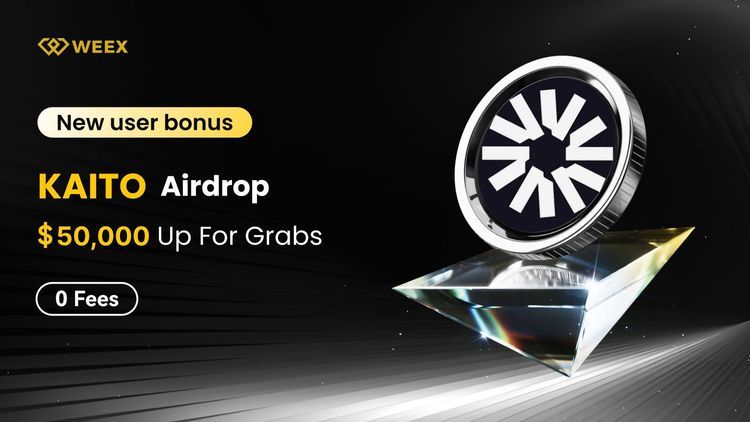
KAIO Airdrop: Share 50,000 USDT on WEEX with 0-Fee Trading
Trade KAIO/USDT with 0 fees on WEEX from May 7–14, 2026. New users can complete deposit and spot trading tasks to share 50,000 USDT in rewards.
What Is SAOS? Strategic American Oil Supply Token Explained
SAOS is a meme token on Solana with a 75,000 USD market cap and 22,000 USD locked liquidity, positioned around oil supply themes but lacking real asset backing
It thrives on pure narrative speculation, with no utility, website, or doxxed team, making it highly volatile and attention-dependent
Traders should distinguish SAOS from legitimate real-world asset projects, as its branding is speculative rather than substantive
Positive aspects include locked liquidity reducing rug pull risks, but low trading activity signals high uncertainty
How to Buy Public Asset Control (PAC) Token in 2026: Latest Solana Buying Guide
How to buy Public Asset Control (PAC) token in 2026, PAC contract address, Solana wallet setup, Jupiter swap guide, latest price, liquidity, and risks.
What Is Public Asset Control (PAC) Token and How Does It Work? Latest Solana PAC Token Guide
Public Asset Control (PAC) token explained. Learn what PAC is, how it works on Solana, current price snapshot, risks, and buying basics.

Can PAC Coin Reach $1 Soon? Analyzing Public Asset Control
PAC is a Solana-based meme token with a government-themed narrative, but it is highly speculative.
At its current price (~$0.0009) and 1B supply, reaching $1 would require a $1B market cap, which is very unlikely.
Short-term moves to $0.001 or $0.01 are more realistic, but the token is highly volatile due to low liquidity and hype-driven trading.
Overall, $1 is not a realistic target, and PAC is better suited for short-term speculation than long-term investment.

United Nations Oil Reserve (UNOS) Crypto: Solana Token, UN Links, and Risks
United Nations Oil Reserve (UNOS) Crypto explained: Solana token basics, UN links, oil-backing claims, market risks, contract checks, and buying cautions.

What Is Public Asset Control (PAC) Coin? Explained for Beginners
Public Asset Control (PAC) is a Solana-based token that uses a “government asset control” narrative involving oil and gold themes, but it has no verified ties to any real institutions or governments. It is mainly an entertainment-focused, speculative meme coin.
The project’s claims about links to entities like BlackRock or Palantir are unverified, and its own disclaimer states it is not a real financial or institutional asset. Like many new Solana tokens, PAC is highly volatile, with low liquidity and limited transparency, including no fully verified audit.
Overall, PAC is a high-risk speculative token driven by hype and storytelling rather than real utility. Beginners are advised to be cautious, verify contract details, and prioritize risk control before considering any trading.
What Is Official Saudi Oil Reserve (OSOR) Coin?
Learn what OSOR coin is, why its Saudi oil narrative matters, how to verify the contract, and what risks to check before trading.
Global Digital Oil Reserve (GDOR): What It Is, Risks, and How to Check It
Global Digital Oil Reserve (GDOR) is an oil-themed Solana token with unclear backing. Learn its risks, market data, and verification checklist.

Is OBC Crypto a Good Investment?
Is OBC crypto a good investment? We analyze the latest market data, holder concentration, liquidity risks, and short-term momentum. Read this before you invest in OBC token.

Can OSOR Reach $1? Full Price Analysis 2026
OSOR crypto price prediction 2026: Can Saudi Oil Reserve token reach 1? Read before buying.
What is World Cup Doge (WCDOGE) Coin? Is WCDOGE a Good Investment?
What is WCDOGE crypto? Meme token or football fan play? Real data, honest risks, and how to buy World Cup Doge.
SIM Owner Details: Legal PTA Check and Safety Guide
Learn what SIM owner details means, how to check SIMs on your CNIC through official PTA channels, and how to avoid lookup scams.
NBIS Stock: What Nebius’ AI Cloud Surge Means Now
NBIS stock jumped as Nebius reported rapid AI cloud growth. See the key Q1 2026 numbers, catalysts, valuation risks, and what to watch next.
WXT Bounty Hunter Program Explained: Earn Crypto Rewards While Learning to Trade on WEEX
The WXT Bounty Hunter Program is a WEEX campaign running from May 8 to May 18, 2026, designed to help beginners learn crypto trading while earning rewards.
Users complete simple tasks like depositing USDT, trading WXT, and holding tokens to receive WXT rewards. New users can earn bonuses such as 200 WXT, while advanced users can compete for larger rewards based on trading activity, including a 100,000 WXT prize pool.
The program uses net metrics (deposits and buys minus withdrawals) to ensure fairness and excludes institutional trading. Holding 300 WXT also unlocks extra benefits like enhanced airdrops.
Overall, it combines learning and earning, making it an entry point into crypto trading on WEEX.
Grass Token Price: GRASS Live Data, Drivers, and Risks
Track Grass token price, market cap, supply, unlocks, and key GRASS price drivers before trading the Solana AI and DePIN token.
WCOR Coin Explained: World Collective Oil Reserve on Solana
WCOR coin is a Solana token tied to an oil-reserve registry narrative. Here’s what it claims, current data, and the risks traders should watch.


